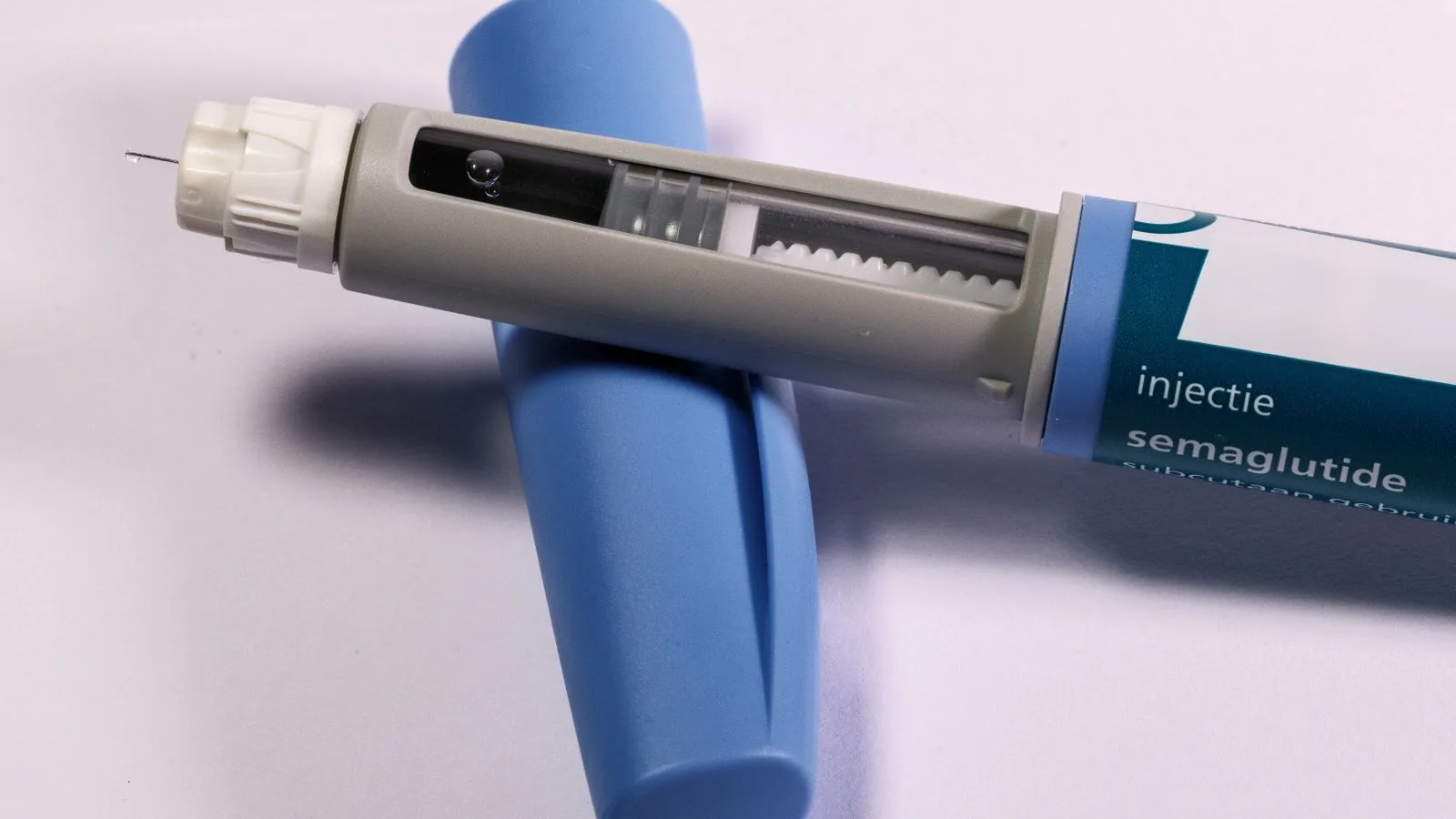
A weight-loss injection that works even in primary-school children with severe obesity: the STEP Young trial shaped the week. Germany’s Bundesrat also approved the emergency care reform, the WHO kept the Ebola emergency in place, a new tablet for breast cancer was approved in the US, and flu and COVID-19 are rising in Germany.
In short: semaglutide clearly lowered body mass index in children aged six to eleven, but it is not approved for this age group. Germany’s emergency care reform aims to relieve emergency departments and link the numbers 112 and 116 117. The Ebola outbreak in the DR Congo counts more than 11,600 confirmed cases; the risk for people in the EU remains very low.
1. Weight-loss injection in children: the STEP Young trial
What happened? On 16 November the STEP Young trial was published in the New England Journal of Medicine and presented at the ObesityWeek congress in the US. 167 children aged six to eleven with obesity received semaglutide or a placebo once a week for two years, all alongside a diet and exercise programme. After 68 weeks, body mass index fell by an average of 13.5 percent on semaglutide and rose by 2.7 percent on placebo. Vomiting, diarrhoea and nausea were clearly more common on the drug; no effects on puberty or bone density were seen.
What does it mean? For the first time there is a large trial of such a drug in children under twelve – but semaglutide is not yet approved for this age group, and long-term data are missing. Background in our encyclopedia: Obesity.
2. Germany: Bundesrat approves emergency care reform
What happened? On 20 November, Germany’s Bundesrat let the law reforming emergency care pass; a motion to call the mediation committee found no majority. Integrated emergency centres are to be set up at around 750 hospitals. There, a standardised initial assessment decides whether someone belongs in the emergency department or in the outpatient on-call practice. The emergency number 112 and the medical on-call service 116 117 are also to be linked more closely.
What does it mean? Patients should reach the right help faster; many individual rules only take effect later, and hospitals and some federal states criticise details.
3. Ebola: WHO keeps the global health emergency
What happened? After the third meeting of its Emergency Committee on 17 November, the WHO decided that the outbreak caused by Bundibugyo virus remains a public health emergency of international concern. By 17 November the DR Congo had recorded 11,613 confirmed cases and 5,678 deaths, most of them in Ituri province. Kenya and Nigeria have reported no new cases since October. There is no licensed vaccine; trials of vaccines and treatments are under way.
What does it mean? For people living in the EU, the ECDC continues to rate the risk as very low. More about the disease in our encyclopedia: Ebola virus disease.
4. US: New tablet for advanced breast cancer
What happened? On 16 November the US Food and Drug Administration approved giredestrant (Wilserdly) in combination with everolimus. It is intended for adults with hormone-sensitive, HER2-negative advanced breast cancer with a change in the ESR1 gene when hormone therapy no longer works. In the evERA trial, among 207 patients in this group, the median time until the disease progressed was 10 instead of 5.5 months. Overall survival data are not yet available.
What does it mean? The approval applies only in the US; a blood-based gene test decides who is eligible. The basics in our encyclopedia: Breast cancer.
5. Germany: Flu and COVID-19 on the rise
What happened? According to the Robert Koch Institute’s weekly report of 19 November, acute respiratory illness in the week from 9 to 15 November was at a moderate level. Rhinoviruses and enteroviruses still dominate. Influenza, mainly A(H1N1), and COVID-19 are increasing, although COVID-19 remains well below last year’s level; RSV plays hardly any role. The RKI has not yet declared a flu wave.
What does it mean? The flu season is getting going. Why antibiotics do not help against colds is explained in our Myth check: Do antibiotics help against a cold?
Our term of the week: Obesity
Obesity means severe excess weight with an abnormally high amount of body fat. In adults it starts at a body mass index of 30; in children, age- and sex-specific reference curves (percentiles) are used. Causes, consequences and treatment: Obesity in the Medical Encyclopedia.
Quiz question of the week
Which number reaches the medical on-call service in Germany when practices are closed? A) 110, B) 116 117, C) 115.
Answer: B is correct. 116 117 is free of charge nationwide; in a life-threatening emergency, always call 112. More practice questions are waiting in the Medical Quiz.
New on YouTube: This weekly review is also available as a Short – subscribe to our channel Medizin Aktuell on YouTube so you never miss an episode.
Note: This weekly review is general information and does not replace medical advice. Figures reflect the cited sources from 16 to 20 November 2026 and may change. Semaglutide is not approved for children under twelve, and giredestrant is not approved in the EU.
Sources
- Semaglutide for the Treatment of Obesity in Children 6 to <12 Years of Age (STEP Young). New England Journal of Medicine, 16 November 2026
- Healio: Wegovy leads to substantial BMI decrease for children aged 6 to 11 years with obesity (16 November 2026)
- Deutsches Ärzteblatt: Bundesrat lässt Notfallreform passieren (20 November 2026, in German)
- German Federal Ministry of Health: Emergency care reform act (in German)
- WHO: Disease Outbreak News – Ebola disease caused by Bundibugyo virus (20 November 2026)
- ECDC: Ebola disease – multi-country outbreak 2026
- The ASCO Post: FDA Approves Giredestrant Plus Everolimus for ESR1-Mutant Advanced Breast Cancer (17 November 2026)
- Dana-Farber Cancer Institute: FDA approves new oral treatment for patients with advanced breast cancer (16 November 2026)
- Robert Koch Institute: ARE weekly report, week 46/2026 (19 November 2026, in German)


Leave a Reply