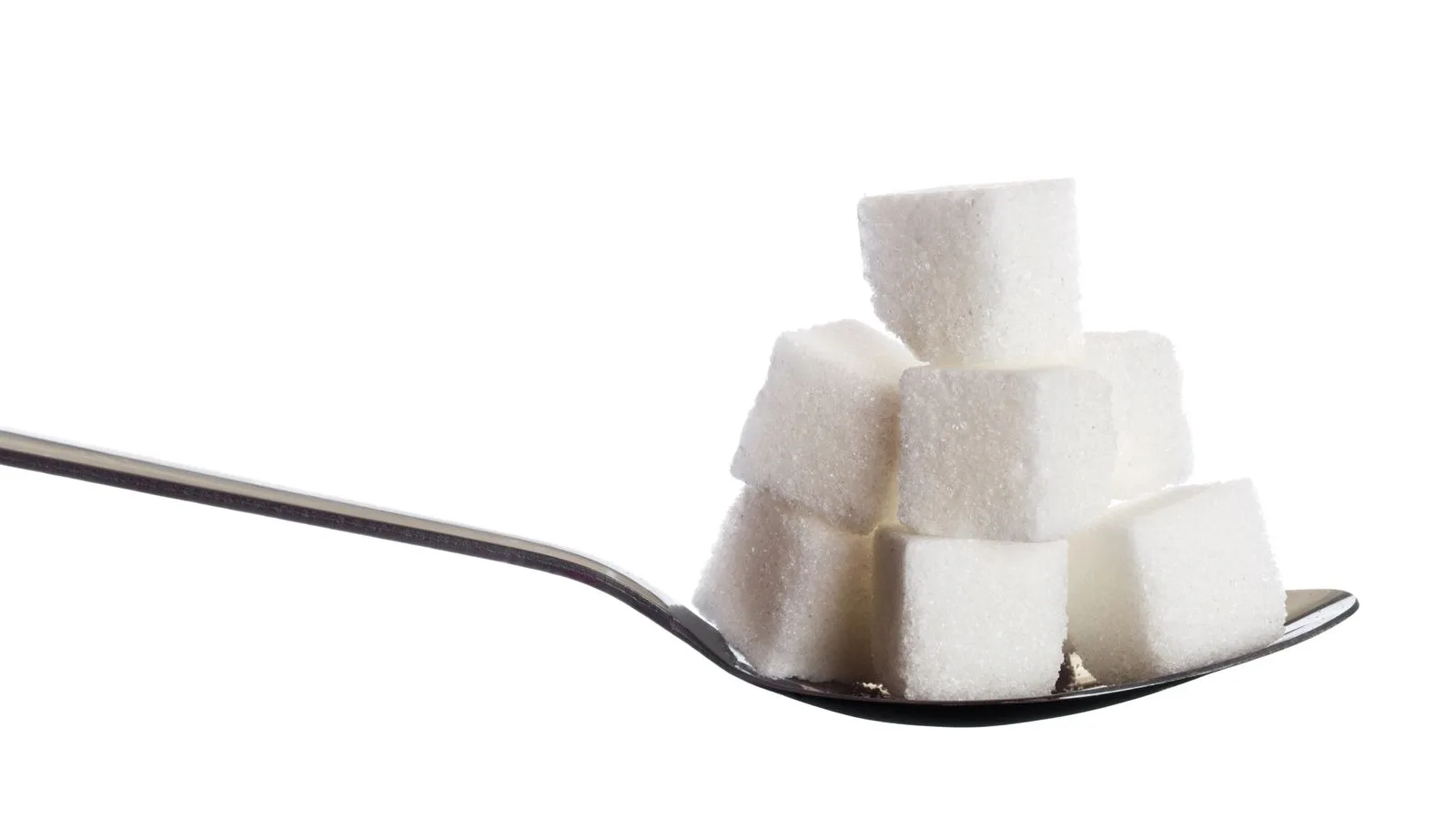
A birthday party, cake, gummy bears – and an hour later the kids are bouncing off the walls. For many parents the case is closed: “Sugar makes children hyperactive.” Some even worry that too many sweets could cause ADHD. But is the famous “sugar high” real?
Short answer: No. In controlled studies where neither the children nor their parents knew whether they had sugar or a sweetener, sugar changed neither behaviour nor concentration. Even children their parents described as “sugar-sensitive” did not react differently. The excitement after parties has more to do with the occasion and with expectations.
Where the myth comes from
The idea spread in the 1970s, when the so-called Feingold diet became popular. It linked behavioural problems in children to certain components of food. From there grew the belief that sugar, too, makes children fidgety.
Everyday life seems to confirm it again and again. Children get lots of sugar mainly on special occasions: birthdays, Halloween, Christmas, outings. Those are exactly the moments when they are wound up anyway – they meet friends, play wildly and stay up later. Sugar and excitement show up together, so it is easy to conclude that one causes the other.
What the research shows
Whether sugar affects behaviour can be tested well: children receive either sugar or a sweetener, and neither they, their parents nor the observers know which. A meta-analysis in JAMA in 1995 pooled exactly such studies – 16 reports with a total of 23 individual studies. The result: sugar does not affect children’s behaviour or cognitive performance. The authors note, however, that a small effect or effects in some children cannot be ruled out.
A 1994 study in the New England Journal of Medicine is particularly revealing. It included 25 preschool children and 23 school-age children whose parents described them as sensitive to sugar. Each family followed a high-sugar diet, a diet with the sweetener aspartame and one with saccharin, three weeks each – nine weeks in total, double-blind. For the children described as sugar-sensitive, none of the 39 behavioural and cognitive measures differed significantly between the diets.
How powerful expectation is was shown by an experiment from the same year: 35 boys aged five to seven, who according to their mothers reacted to sugar, all received a drink with a sweetener. But half of the mothers were told their son had received a large dose of sugar. These mothers then rated their children as significantly more hyperactive – and, on video, stayed physically closer to them to keep them under control.
And ADHD? A large birth cohort from Brazil with several thousand children found a link between sugar intake and ADHD only in six-year-old boys, not in girls or at age eleven. Over the years, sugar intake did not predict new cases of ADHD. The researchers suggest that higher sugar intake is more likely a consequence of the disorder than its cause.
What this means for you
If your child is wound up after a party, it is very likely the situation and not the cake. A calm transition, such as reading aloud or a short walk, often helps more than banning sweets. If restlessness, concentration problems or difficulties at nursery or school persist, it is worth talking to your paediatrician – regardless of how much sugar your child eats.
That is no licence for unlimited snacking, though. The World Health Organization recommends limiting free sugars to less than ten per cent of daily energy intake, ideally to five per cent or less – with weight and tooth decay in mind. How the body really uses nutrients from food is also the topic of our Myth check: Is spinach especially rich in iron? Another everyday myth: Myth check: Does cold weather make you sick?
Frequently asked questions
Is a “sugar high” in children real?
A “sugar high” in the sense of sudden overexcitement is not supported by science. In blinded studies, children behaved no differently after sugar than after a sweetener. In everyday life, the term usually describes the excitement at parties.
Can sugar cause ADHD?
No, there is no evidence for that. The causes of ADHD are complex, and according to current knowledge sugar is not one of them. A cohort study suggests that children with ADHD tend to eat more sugar rather than sugar triggering ADHD.
Why are kids so hyper after birthday parties?
Probably because of the situation: lots of children, games, noise and a break from routine. Add to that the expectations of adults, who watch behaviour after sweets more critically.
How much sugar is okay for children?
The WHO recommends that children and adults limit free sugars to less than ten per cent of daily energy intake; less than five per cent may bring additional benefits. Free sugars include honey, syrups and fruit juices.
This article is for general information only and does not replace medical advice.
Sources
- Wolraich ML et al. The effect of sugar on behavior or cognition in children. A meta-analysis. JAMA. 1995;274(20):1617–1621. PubMed
- Wolraich ML et al. Effects of diets high in sucrose or aspartame on the behavior and cognitive performance of children. N Engl J Med. 1994;330(5):301–307. PubMed
- Hoover DW, Milich R. Effects of sugar ingestion expectancies on mother-child interactions (1994). UKnowledge, University of Kentucky
- Del-Ponte B et al. Sugar consumption and attention-deficit/hyperactivity disorder (ADHD): a birth cohort study. J Affect Disord. 2019;243:290–296. University of São Paulo record
- World Health Organization: Healthy diet – Fact sheet (as of January 2026)
- Live Science: Does sugar make kids hyper? (August 2016)


Leave a Reply